The assassination of President John F. Kennedy on November 22, 1963, in Dallas, Texas, remains one of the most shocking and historically significant events of the 20th century. The sudden and violent death of the charismatic 35th President of the United States sent shockwaves across the nation and the world, leaving an indelible mark on collective memory. While official investigations concluded that Lee Harvey Oswald acted as the lone assassin, the event rapidly became fertile ground for numerous conspiracy theories that continue to fascinate and divide public opinion decades later.
The Fateful Day in Dealey Plaza
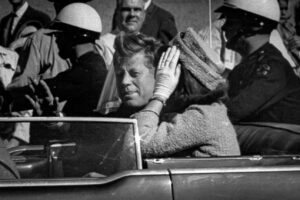
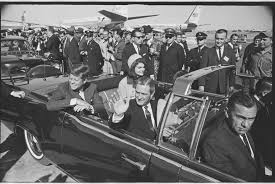
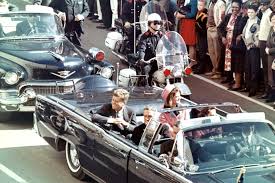
On that fateful Friday, President John F. Kennedy was on a political trip to Texas, accompanied by his wife, First Lady Jacqueline Kennedy, and Governor of Texas, John Connally, and his wife, Nellie Connally. The presidential motorcade, an open-top limousine, was slowly proceeding through the streets of Dallas, allowing crowds to catch a glimpse of the popular President.
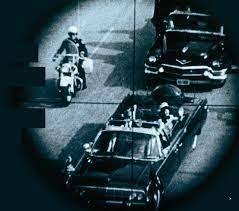
At approximately 12:30 p.m. Central Standard Time, as the motorcade made a slow left turn from Houston Street onto Elm Street and passed the Texas School Book Depository building in Dealey Plaza, multiple shots rang out. President Kennedy was hit twice: once in the back (which exited his throat), and a second, fatal shot struck him in the head. Governor Connally, riding in the seat in front of Kennedy, was also severely wounded by one of the shots. Chaos erupted as Secret Service agents reacted, and the limousine sped towards Parkland Memorial Hospital.
Despite immediate medical attention, President Kennedy was pronounced dead at 1:00 p.m. CST, approximately 30 minutes after the shooting. His death immediately elevated Vice President Lyndon B. Johnson to the presidency. Johnson was sworn in aboard Air Force One at Dallas Love Field just hours later, before the plane departed for Washington, D.C., carrying President Kennedy’s casket and a grieving Jacqueline Kennedy.
The Alleged Assassin: Lee Harvey Oswald
Within hours of the assassination, Dallas police began their investigation. Based on witness accounts and evidence, their attention quickly focused on the Texas School Book Depository. A rifle was found on the sixth floor of the building, which was identified as a 6.5x52mm Italian Carcano M91/38 rifle. Shortly thereafter, Lee Harvey Oswald, a 24-year-old employee of the Depository, was arrested.
Oswald’s capture was dramatic. After leaving the Depository shortly after the shooting, he fatally shot Dallas Police Officer J.D. Tippit during an encounter approximately 45 minutes after Kennedy’s assassination. Oswald was subsequently apprehended inside a movie theater. A former U.S. Marine who had a history of defection to the Soviet Union and strong pro-Cuban sympathies, Oswald vehemently denied his involvement in the assassination, famously claiming, “I’m just a patsy.”
However, the rapid course of events took another shocking turn. On November 24, 1963, just two days after the assassination and while being transferred from police headquarters, Lee Harvey Oswald was himself fatally shot by Jack Ruby, a Dallas nightclub owner. The shooting, which was captured live on national television, fueled immediate suspicions of a wider conspiracy, as Oswald’s death silenced the only person who could directly provide his perspective on the events. Ruby claimed he shot Oswald out of grief and to spare Jacqueline Kennedy the ordeal of a trial, but his actions only deepened the mystery surrounding the assassination.
Official Investigations and Their Findings
The sudden and traumatic death of a sitting U.S. President demanded an immediate and thorough investigation.
1. The Warren Commission
Days after the assassination, President Lyndon B. Johnson established the Warren Commission, chaired by Chief Justice Earl Warren, to investigate the assassination. The Commission’s comprehensive 888-page report, released in September 1964, concluded that:
- Lee Harvey Oswald acted alone in assassinating President Kennedy.
- Oswald fired three shots from the sixth-floor window of the Texas School Book Depository.
- One shot missed, one struck Kennedy in the back (exiting his throat), and a third, fatal shot struck his head.
- The same bullet that struck Kennedy in the back also passed through Governor Connally, causing multiple wounds. This particular finding became known as the “single bullet theory” or “magic bullet theory”, as it implied an improbable trajectory for one bullet to cause seven wounds in two men.
- Jack Ruby also acted alone in killing Oswald.
- There was no credible evidence of any conspiracy, domestic or foreign, to assassinate President Kennedy.
The Warren Commission’s findings, while offering an official narrative, failed to quell public doubt and skepticism, largely due to lingering questions about Oswald’s motive, the specifics of the shooting sequence, and the immediate cover-up of certain details by authorities.
2. The House Select Committee on Assassinations (HSCA)
In 1976, prompted by persistent public concerns and new evidence, the U.S. House of Representatives established the House Select Committee on Assassinations (HSCA) to reinvestigate the assassinations of both John F. Kennedy and Martin Luther King Jr. The HSCA conducted extensive research from 1976 to 1979. Its final report, released in 1979, largely agreed with the Warren Commission that Oswald fired the shots that killed Kennedy and wounded Connally. However, the HSCA departed significantly from the Warren Commission by concluding that:
- President Kennedy was “probably assassinated as a result of a conspiracy.”
- There was a “high probability that two gunmen fired at the President,” suggesting the possibility of a second, unidentified shooter, based on acoustical evidence (though this evidence later became highly debated).
- The Committee stated it could not identify the other possible conspirators or the extent of the conspiracy.
Despite the HSCA’s findings, no definitive conspirators were ever identified, and the debate continued.
The Zapruder Film and Key Evidence
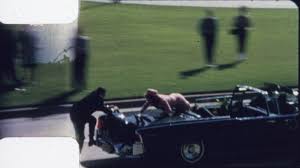
A crucial piece of evidence in the assassination investigation was the Zapruder film. Shot by Abraham Zapruder, a Dallas businessman, with his 8mm home-movie camera, this silent color film captured the entire sequence of the assassination from a grassy knoll overlooking Elm Street. The Zapruder film became the most complete visual record of the event and has been analyzed frame-by-frame by countless investigators, experts, and conspiracy theorists. Frame 313, which shows the fatal headshot to President Kennedy, is particularly scrutinized, as it appears to show Kennedy’s head moving backward and to the left, which some argue contradicts the idea of a single shot from behind. This particular aspect has been a central point for those who believe in a second shooter from the front or side.
Other key evidence includes the Carcano rifle found in the Texas School Book Depository, ballistics evidence linking it to the bullets found, and eyewitness testimonies, which often varied significantly in their accounts of the number and direction of shots. The medical evidence, particularly the autopsy findings, has also been a continuous source of debate.
Proliferation of Conspiracy Theories
The ambiguous circumstances surrounding the assassination, combined with Oswald’s immediate murder, the Warren Commission‘s findings, and inconsistencies in official accounts, led to a proliferation of conspiracy theories. These theories propose various alternative scenarios and alleged conspirators:
- The Mafia: This theory suggests organized crime figures, angered by Attorney General Robert F. Kennedy’s aggressive prosecution of the Mafia, orchestrated the assassination. Lee Harvey Oswald‘s alleged connections to figures with mob ties (through Jack Ruby) are sometimes cited.
- The CIA: Some theories posit that elements within the Central Intelligence Agency, disillusioned with Kennedy’s policies (e.g., after the Bay of Pigs failure or his efforts to withdraw from Vietnam), conspired to remove him.
- Anti-Castro Cubans: This theory suggests that Cuban exiles, angered by Kennedy’s perceived betrayal during the Bay of Pigs invasion, or even Fidel Castro’s government itself (in retaliation for U.S. assassination attempts on Castro), were behind the plot.
- Lyndon B. Johnson: A more extreme theory alleges that Vice President Johnson orchestrated the assassination to gain the presidency.
- Military-Industrial Complex: This theory posits that powerful elements within the military or defense industry, wary of Kennedy’s intentions regarding Vietnam or the Cold War, arranged his death.
- Multiple Shooters: The idea that there was more than one shooter, perhaps one on the “grassy knoll,” is one of the most persistent theories, often supported by some interpretations of the Zapruder film and acoustical evidence.
Despite numerous books, documentaries, and ongoing public discourse, no definitive, widely accepted evidence has emerged to substantiate any of these conspiracy theories. The U.S. government, through various investigations, has maintained that Oswald was the sole assassin, though the HSCA acknowledged the “probability of a conspiracy.”
Lasting Impact and Legacy
The assassination of John F. Kennedy had a profound and lasting impact on American society and global politics. It shattered a generation’s sense of innocence and optimism, ushering in a period of national mourning and skepticism towards authority.
- Political Transition: The swift transition of power to Lyndon B. Johnson, though constitutional, highlighted vulnerabilities in presidential succession, leading to the eventual ratification of the 25th Amendment.
- Public Trust: The lingering controversies and conspiracy theories eroded public trust in government institutions and official narratives, a skepticism that persists to this day.
- Cultural Trauma: For many Americans, Kennedy’s death remains a deeply personal and traumatic memory, marking a turning point in the nation’s post-war confidence.
- Historical Speculation: The “what if” questions surrounding Kennedy’s unfulfilled second term continue to fuel historical debate about the Vietnam War, civil rights, and the trajectory of American society.
The death of President Kennedy in Dealey Plaza remains an open wound in the American psyche, a moment forever etched in history, continually revisited, analyzed, and debated, underscoring the enduring power of historical mystery and collective memory.