
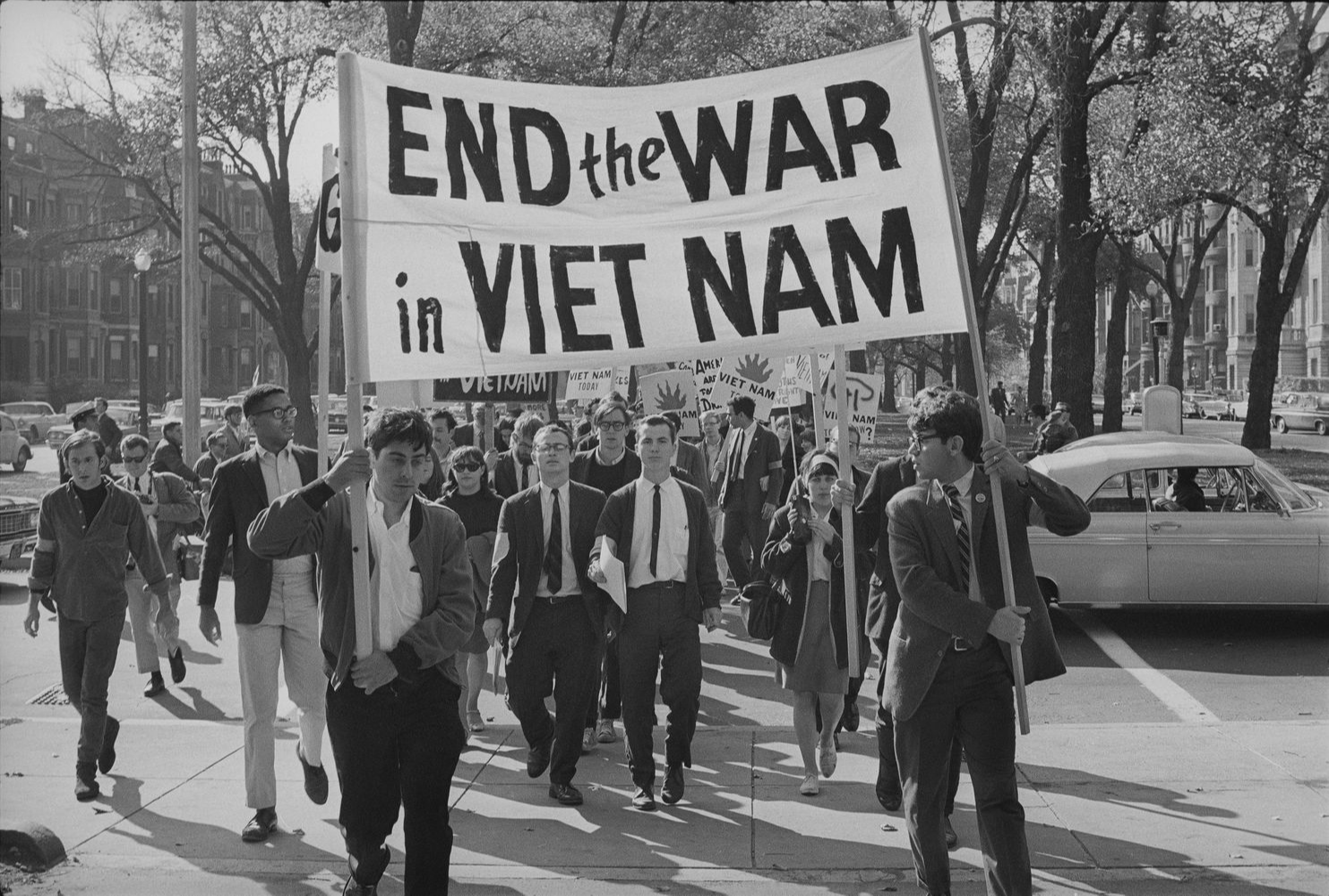
The Vietnam War stands as one of the most contentious and tragic chapters in American history, claiming the lives of nearly 60,000 U.S. service members and millions of Vietnamese. Far from a sudden eruption, American involvement was the culmination of decades of evolving foreign policy, Cold War ideological battles, and complex regional dynamics. Understanding the multifaceted reasons for U.S. involvement in Vietnam requires a deep dive into the geopolitical climate of the mid-20th century, the legacy of French colonialism, and the fervent belief in the spread of communism.
The Legacy of Colonialism and the Rise of Vietnamese Nationalism
The roots of the conflict stretch back long before direct American military engagement. For over a century, Vietnam, along with Laos and Cambodia, was part of French Indochina, a French colonial possession. Vietnamese nationalism, driven by a desire for independence, simmered for decades and intensified during World War II. When Japan occupied Vietnam, the Vietnamese nationalist movement, the Viet Minh, led by the communist leader Ho Chi Minh, gained significant popular support by fighting both the Japanese and, eventually, the returning French colonial forces.
After World War II, instead of granting independence, France sought to reassert its control, leading to the First Indochina War (1946-1954). Initially, the U.S. remained largely neutral, even expressing some sympathy for Vietnamese independence. However, as the Cold War intensified globally, U.S. perceptions began to shift. The Truman administration, fearing the spread of communism, began to financially support France’s efforts, viewing Ho Chi Minh less as a nationalist and more as a pawn of Moscow and Beijing. This marked the initial, albeit indirect, step towards deeper American involvement.
The Domino Theory: A Cold War Imperative
One of the most significant ideological underpinnings for U.S. engagement in Southeast Asia was the Domino Theory. First articulated by President Dwight D. Eisenhower in 1954, this theory posited that if one country in Southeast Asia fell to communism, then neighboring countries would inevitably follow, like a chain of falling dominoes. Given the recent communist victories in China (1949) and the Korean War (1950-1953), U.S. policymakers genuinely feared a monolithic communist bloc extending across Asia.
The Domino Theory transformed Vietnam from a regional anti-colonial struggle into a crucial battleground in the broader Cold War against global communism. Preventing Vietnam’s fall was seen not just as protecting Vietnam, but as safeguarding American strategic interests and democratic ideals throughout Asia and beyond. This fear dictated a policy of containment, aiming to prevent the expansion of communist influence wherever it threatened.
The Geneva Accords and a Divided Vietnam
The First Indochina War concluded with the decisive French defeat at the Battle of Dien Bien Phu in May 1954. The subsequent Geneva Accords of July 1954 aimed to resolve the conflict. Key provisions included:
- A temporary division of Vietnam at the 17th parallel, creating North Vietnam (controlled by the Viet Minh under Ho Chi Minh) and South Vietnam.
- A demilitarized zone (DMZ) separating the two regions.
- National elections to reunify the country, scheduled for 1956.
The United States, however, did not sign the Geneva Accords, though it stated it would not disturb them. Crucially, the U.S. feared that the nationwide elections would inevitably lead to a communist victory, given Ho Chi Minh’s widespread popularity. Consequently, the U.S. committed to supporting the creation of an independent, anti-communist South Vietnam and worked to prevent the 1956 elections from taking place. This directly contradicted the spirit of the Geneva Accords and set the stage for future conflict.
U.S. Support for South Vietnam and Ngo Dinh Diem
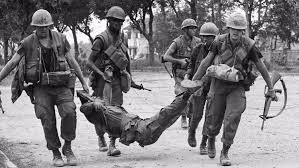
With the goal of building a stable, non-communist state in the South, the U.S. began providing substantial military and economic aid to the Republic of Vietnam (South Vietnam). The primary leader supported by the U.S. was Ngo Dinh Diem, an ardent anti-communist who became President of South Vietnam in 1955.
Initially, Diem was seen by Washington as a strong nationalist alternative to Ho Chi Minh. However, Diem’s regime proved increasingly authoritarian, corrupt, and repressive. He alienated significant segments of the South Vietnamese population, including Buddhists, through his discriminatory policies and heavy-handed tactics. His refusal to implement land reforms and his reliance on a small circle of loyalists further undermined his legitimacy. Despite growing concerns about Diem’s leadership, the U.S. continued to support him, fearing that his overthrow would lead to chaos and a communist takeover. This unwavering support for a largely unpopular and undemocratic regime became a significant factor in fueling anti-government sentiment and strengthening the communist-backed insurgency in the South, the Viet Cong.
The Gulf of Tonkin Incident and Escalation
The early 1960s saw a gradual increase in U.S. military advisors in South Vietnam under President John F. Kennedy. However, the pivotal event that dramatically escalated U.S. involvement in Vietnam was the Gulf of Tonkin Incident in August 1964.
On August 2, 1964, the USS Maddox, an American destroyer, engaged North Vietnamese torpedo boats in the Gulf of Tonkin. While the details of this initial engagement remain somewhat contested, the U.S. claimed its ship was attacked. Two days later, on August 4, the USS Maddox and another destroyer, the USS Turner Joy, reported a second attack, though subsequent analysis, including declassified documents, suggests this second “attack” was likely misinterpreted radar signals or bad weather rather than an actual assault.
Nevertheless, the Johnson administration presented these events to Congress as unprovoked aggression. On August 7, 1964, Congress overwhelmingly passed the Gulf of Tonkin Resolution, which authorized President Lyndon B. Johnson to take “all necessary measures to repel any armed attack against the forces of the United States and to prevent further aggression.” This resolution effectively gave President Johnson a broad mandate to escalate the war without a formal declaration of war, setting the stage for the massive commitment of U.S. ground troops and sustained bombing campaigns that began in 1965.
Containment and Ideological Warfare
At its core, U.S. involvement in Vietnam was a direct manifestation of the Cold War policy of containment. The overarching goal was to prevent the global spread of communism, which was perceived as an existential threat to American interests and democratic values. U.S. policymakers viewed the conflict in Vietnam not as a civil war, but as a proxy war where the Soviet Union and China were actively supporting North Vietnam to expand their influence into Southeast Asia.
The U.S. believed that if Vietnam fell, it would embolden communist movements elsewhere, leading to a domino effect across Asia, and potentially Africa and Latin America. This ideological imperative led the U.S. to commit immense resources and eventually hundreds of thousands of troops to prop up a South Vietnamese government that struggled with legitimacy and internal stability. The war became a symbolic battleground between two competing global systems: Western capitalism and democracy versus Soviet-style communism.
Domestic Factors and Political Pressures
Beyond the geopolitical considerations, domestic political factors also played a role in the escalation. U.S. presidents, particularly Kennedy and Johnson, felt immense pressure not to be seen as “losing” Vietnam to communism, especially after the perceived “loss” of China in 1949. This fear of appearing weak on communism fueled a reluctance to disengage, even as the war became increasingly costly and unpopular.
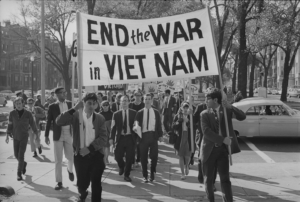
The military-industrial complex also had a vested interest in continued defense spending and military engagement. Public opinion, initially supportive of intervention based on the prevailing Cold War narrative, gradually turned against the war as casualties mounted and the conflict dragged on with no clear end in sight.
Conclusion: A Web of Complex Motivations
The reasons for U.S. involvement in the Vietnam War are deeply intertwined and complex. They stemmed from the legacy of French colonialism, the pervasive fear of the Domino Theory in the context of the Cold War, the perceived necessity of containing communism, the fateful decisions surrounding the Geneva Accords, the flawed support for Ngo Dinh Diem’s regime, and the decisive escalation triggered by the Gulf of Tonkin Incident.
Ultimately, the U.S. entered Vietnam driven by a sincere, albeit often misguided, belief that it was defending freedom and preventing the spread of a dangerous ideology. However, a failure to fully understand Vietnamese nationalism, the resilience of the Viet Cong, and the limitations of military power in unconventional warfare led to a protracted and ultimately unwinnable conflict, leaving a profound and enduring impact on both the United States and Vietnam. The lessons learned from this war continue to shape foreign policy debates and military strategies to this day.