Adolf Hitler remains one of the most infamous figures in human history, an individual whose actions and ideology plunged the world into its deadliest conflict and orchestrated an unparalleled genocide. As the leader of the Nazi Party, Chancellor of Germany from 1933 to 1945, and Führer of Nazi Germany from 1934 to 1945, Hitler reshaped the course of the 20th century, leaving behind a legacy of destruction, hatred, and an enduring lesson on the perils of extremism. Understanding his life, rise to power, and the devastating consequences of his rule is crucial for comprehending a pivotal period in global history.
Early Life and Formative Years
Adolf Hitler was born on April 20, 1889, in Braunau am Inn, a small town in Austria-Hungary, near the German border. His early life was marked by a strained relationship with his authoritarian father, Alois Hitler, and a strong attachment to his mother, Klara. After his father’s death in 1903 and his mother’s in 1907, Hitler’s youth was largely aimless. He moved to Vienna, aspiring to become an artist, but was twice rejected by the Academy of Fine Arts. During his time in Vienna, he developed a deep-seated anti-Semitism and an admiration for German nationalism, influences that would later become central to his radical worldview.
He relocated to Munich, Germany, in 1913, reportedly to avoid conscription into the Austro-Hungarian army. When World War I broke out in 1914, Hitler volunteered for the Bavarian Army, serving as a dispatch runner. He was wounded twice and decorated with the Iron Cross, First Class, for bravery. The war profoundly impacted him; he saw Germany’s defeat as a betrayal by internal enemies, particularly communists and Jews, fueling his nascent extremist beliefs.
The Rise to Power: Exploiting Instability
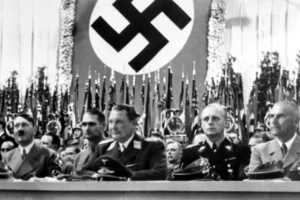
Following Germany’s defeat in World War I and the signing of the Treaty of Versailles – which imposed heavy reparations and territorial losses – Germany entered a period of profound political and economic instability known as the Weimar Republic. This turbulent environment, exacerbated by hyperinflation in the 1920s and the Great Depression in the early 1930s, created fertile ground for radical ideologies.
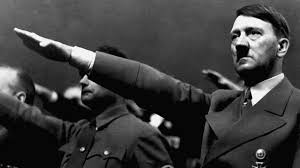
Hitler joined the small German Workers’ Party in 1919, quickly rising through its ranks due to his powerful oratorical skills and charismatic, albeit aggressive, speaking style. He renamed it the National Socialist German Workers’ Party, or Nazi Party. His early attempts to seize power, such as the failed Beer Hall Putsch in Munich in 1923, led to his imprisonment. During his incarceration, he wrote “Mein Kampf” (My Struggle), an autobiography and exposition of his political ideology, outlining his anti-Semitic views, his vision of racial purity, and his plans for German expansion (Lebensraum).
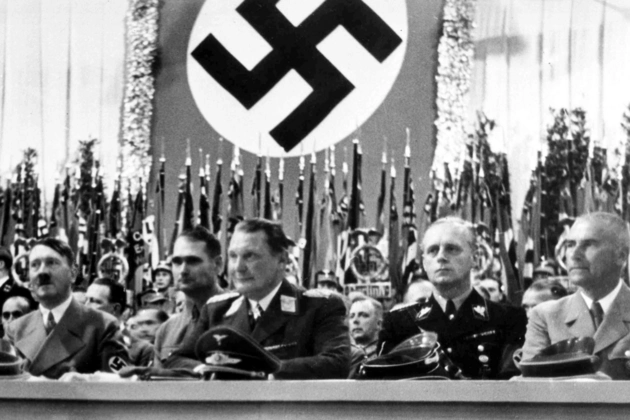
Upon his release, Hitler refocused on gaining power through legal means. He meticulously built the Nazi Party into a mass movement, leveraging sophisticated propaganda techniques, rallies, and a paramilitary wing, the SA (Sturmabteilung), to intimidate opponents. The economic crisis of the Great Depression, which caused mass unemployment and despair, significantly boosted the Nazi Party’s popularity. By appealing to widespread disillusionment, fear of communism, and a desire for national resurgence, Hitler positioned himself as the strong leader Germany needed. On January 30, 1933, President Paul von Hindenburg appointed Adolf Hitler as Chancellor of Germany.
Consolidation of Dictatorship: The Third Reich
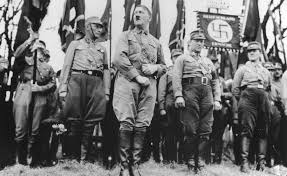
Upon becoming Chancellor, Hitler swiftly dismantled Germany’s democratic institutions and consolidated his power, establishing the Third Reich. The Reichstag Fire in February 1933, blamed on communists, served as a pretext for emergency decrees that suspended civil liberties. The Enabling Act of March 1933 effectively granted Hitler dictatorial powers, allowing him to pass laws without parliamentary approval. Opposition parties were banned, trade unions abolished, and the media brought under state control.
The Night of the Long Knives in 1934 saw the purging of political rivals within his own party, particularly the leadership of the SA, solidifying his control over the military and party apparatus. Upon President Hindenburg’s death later that year, Hitler merged the offices of Chancellor and President, proclaiming himself Führer (Leader) and Reich Chancellor, thereby becoming the undisputed dictator of Germany. His regime rapidly transformed Germany into a totalitarian state, underpinned by a pervasive cult of personality, aggressive propaganda, and a brutal secret police (the Gestapo).
Ideology of Hate: Nazism and Anti-Semitism
The core of Hitler’s regime was Nazism, a political ideology rooted in extreme nationalism, racial supremacy, and a virulent form of anti-Semitism. Hitler believed in the superiority of the “Aryan race,” which he identified with the German people, and viewed Jews, Roma, Slavs, and others as “inferior races” or “undesirables” who posed a threat to racial purity. This racist worldview fueled his expansionist foreign policy (Lebensraum, or “living space” in Eastern Europe) and, most horrifyingly, his systematic campaign of genocide.
Under Hitler’s rule, Germany embarked on massive rearmament, openly defying the Treaty of Versailles. This military buildup was integral to his plans for conquest and establishing German dominance over Europe.
The Onset of World War II
Hitler’s aggressive foreign policy rapidly escalated international tensions. He annexed Austria in 1938 (Anschluss) and dismembered Czechoslovakia through the Munich Agreement. Convinced that Britain and France would not intervene, Adolf Hitler ordered the invasion of Poland on September 1, 1939, marking the beginning of World War II. Germany’s “Blitzkrieg” (lightning war) tactics, characterized by rapid, coordinated attacks using tanks and air power, quickly overwhelmed Poland and subsequently most of Western Europe, including France, in 1940.
Germany forged alliances with Italy and Japan, forming the Axis Powers. Despite suffering defeat in the Battle of Britain, Hitler launched the massive invasion of the Soviet Union (Operation Barbarossa) in June 1941, opening the Eastern Front, which would become the largest and deadliest theater of the war.
The Holocaust: A Crime Against Humanity
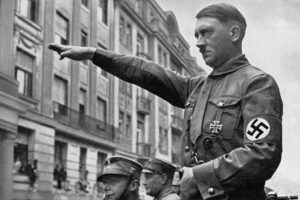
While World War II raged, Hitler’s regime simultaneously implemented its “Final Solution to the Jewish Question,” a systematic, state-sponsored genocide known as the Holocaust. Driven by his extreme anti-Semitic ideology, the Nazis persecuted, deported, and murdered approximately six million Jews across Europe. This unprecedented crime against humanity also targeted other groups deemed “undesirable” or “enemies of the state,” including Roma, homosexuals, disabled people, Soviet prisoners of war, and political dissidents.
The victims were rounded up, subjected to forced labor, starvation, and unimaginable brutality in hundreds of concentration camps such as Dachau and Buchenwald. Many were then transported to extermination camps like Auschwitz-Birkenau, Treblinka, and Sobibor, where they were systematically murdered in gas chambers. The scale and industrial efficiency of this genocide remain a chilling testament to the depths of human cruelty and the destructive power of unchecked hatred.
Downfall and Death
The tide of World War II began to turn against Nazi Germany after the disastrous defeat at Stalingrad in 1943 and the subsequent Allied invasions. The D-Day landings in Normandy in June 1944 opened a crucial Western Front, while the Soviet Union steadily advanced from the east. Facing overwhelming Allied forces from all sides, Germany’s military machine crumbled.
As Soviet troops closed in on Berlin, Adolf Hitler retreated to his underground bunker (Führerbunker) beneath the Reich Chancellery. On April 30, 1945, with the Red Army just blocks away, Hitler committed suicide by gunshot, while his newlywed wife, Eva Braun, died by cyanide poisoning. Their bodies were reportedly burned outside the bunker. His death effectively marked the end of Nazi Germany and, within days, the end of World War II in Europe.
Lasting Legacy and Historical Lessons
Adolf Hitler’s legacy is one of unparalleled devastation and serves as a stark warning to future generations. His reign resulted in the deaths of tens of millions of people in World War II, the systematic murder of millions more in the Holocaust, and the complete destruction of Germany. His ideology of racial hatred and totalitarian control left an indelible scar on the fabric of human civilization.
The study of Hitler and Nazi Germany remains crucial for understanding the mechanisms of fascism, the dangers of propaganda and unchecked power, and the importance of safeguarding democracy and human rights. His story is a perpetual reminder of how a charismatic extremist can exploit societal grievances and economic hardship to unleash unimaginable horrors, emphasizing the vital need for vigilance against hatred and intolerance in all its forms.