
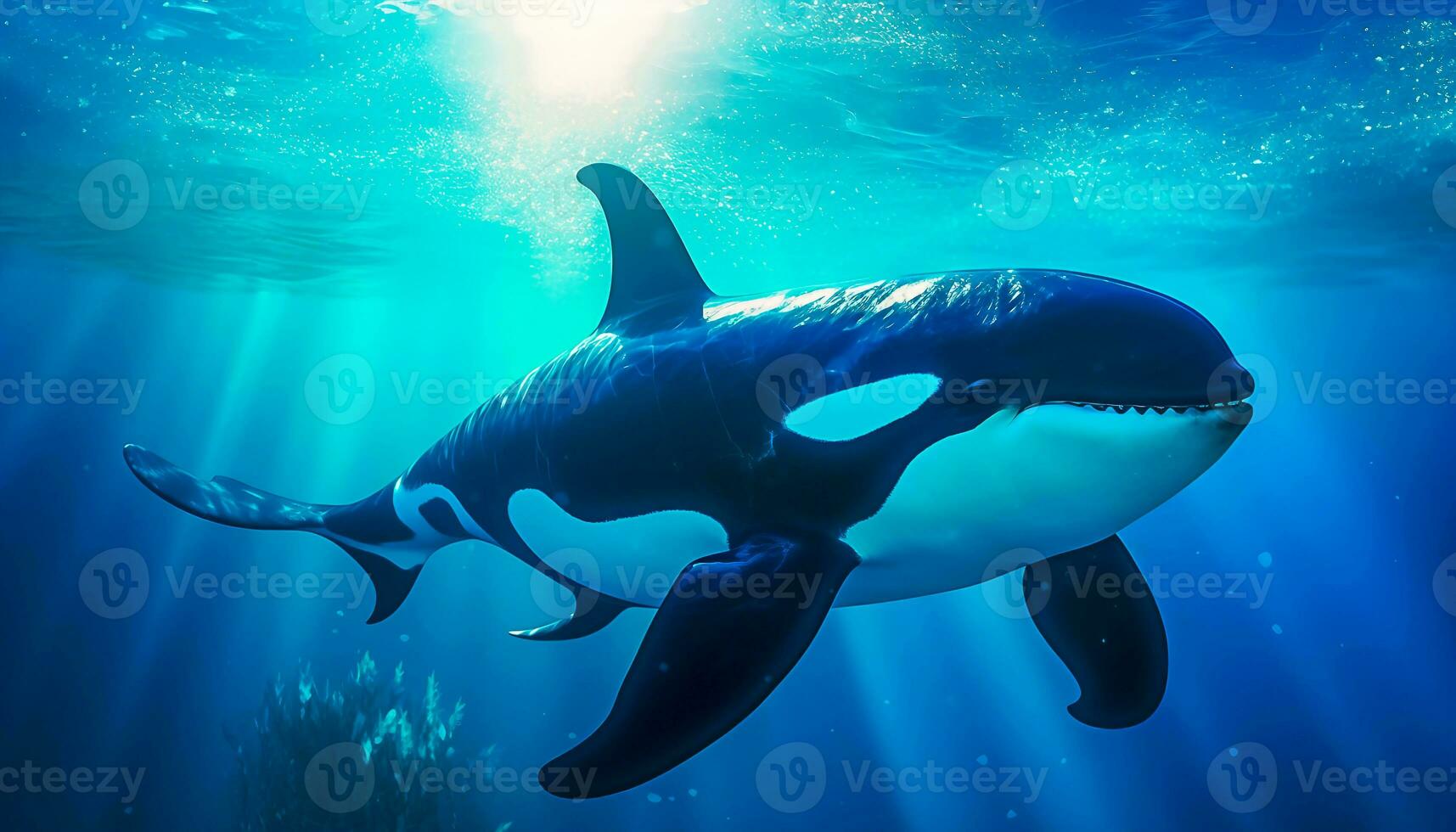
The killer whale, scientifically known as Orcinus orca, is arguably the most recognizable and captivating marine mammal on Earth. Despite its common name, often evoking fear, the orca is not a whale in the traditional sense, but the largest member of the oceanic dolphin family (Delphinidae). Revered as the apex predator of every ocean, from the frigid Arctic to the warm tropics, this highly intelligent and socially complex creature plays a pivotal role in marine ecosystems. Our understanding of Orcinus orca continues to evolve, revealing a species with intricate social structures, sophisticated hunting strategies, and remarkable cognitive abilities.

Taxonomy and Physical Characteristics
The killer whale belongs to the order Cetacea, suborder Odontoceti (toothed whales). Its distinctive black-and-white coloration makes it easily identifiable: a stark black back and sides, a white chest and belly, and a prominent white patch behind each eye, along with a grey “saddle patch” just behind the dorsal fin. Each individual’s saddle patch and eye patch shape can be unique, acting like a fingerprint for researchers.
Orcas are sexually dimorphic, with males being significantly larger than females. Adult males can reach lengths of up to 9.8 meters (32 feet) and weigh over 10,000 kilograms (22,000 pounds), possessing a tall, triangular dorsal fin that can stand as high as 1.8 meters (6 feet). Females are smaller, typically reaching lengths of 8.5 meters (28 feet) and weighing up to 7,500 kilograms (16,500 pounds), with a shorter, more curved dorsal fin. Their powerful, torpedo-shaped bodies are built for speed and agility, enabling bursts of up to 56 km/h (35 mph). Their robust teeth, numbering between 40 and 56, are perfectly adapted for grasping and tearing prey.
Global Distribution and Diverse Habitats
The killer whale boasts the widest distribution of any marine mammal, inhabiting all oceans of the world. While they are found in tropical and subtropical waters, they are particularly abundant in colder, high-latitude regions such as the North Pacific, North Atlantic, and the Southern Ocean around Antarctica. Their remarkable adaptability allows them to thrive in diverse marine environments, from shallow coastal waters to the open ocean.
Despite their global presence, orca populations are not uniformly distributed. Different groups of killer whales have adapted to specific ecological niches, leading to distinct ecotypes or forms. These ecotypes differ not only in their geographic range but also in their physical appearance, diet, hunting techniques, vocalizations, and even genetic makeup, highlighting the incredible diversity within the species.
Highly Complex Social Structure: The Pod
Perhaps the most fascinating aspect of killer whale biology is their highly intricate and stable social structure. Orcas live in matriarchal family groups called pods, which can range from just a few individuals to dozens. These pods are typically led by the oldest female, the matriarch, whose knowledge and experience are crucial for the pod’s survival, guiding them to foraging grounds and teaching younger generations.
In some populations, particularly the “resident” ecotype in the North Pacific, these family bonds are incredibly strong, with individuals remaining with their mothers for their entire lives. Pods communicate through a complex repertoire of clicks, whistles, and pulsed calls, often developing unique “dialects” that are specific to their family group and passed down through generations. This vocal learning suggests a high degree of cultural transmission, akin to human cultures. The stability and cooperation within these orca pods are fundamental to their success as apex predators.
Unparalleled Intelligence and Communication

Killer whales are among the most intelligent animals on the planet. Their large brains, complex social structures, and advanced hunting strategies are strong indicators of their cognitive prowess. They demonstrate remarkable problem-solving abilities, cultural learning, and even empathy within their pods.
A key aspect of their intelligence is their sophisticated echolocation system. Orcas emit high-frequency clicks that travel through the water, bounce off objects, and return as echoes. By interpreting these echoes, they can construct a detailed “sound map” of their surroundings, allowing them to navigate, locate prey, and communicate even in murky waters or complete darkness. This acoustic sensory ability is incredibly precise, allowing them to detect objects as small as a golf ball from a considerable distance.
Their vocalizations are diverse and serve various purposes, from maintaining pod cohesion to coordinating hunts. Researchers have identified distinct calls for different pods, even within the same geographic region, highlighting their unique cultural identities.
Apex Predators with Diverse Hunting Strategies
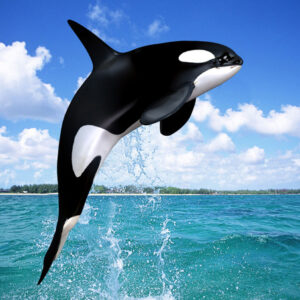
True to their name, killer whales sit at the top of the marine food chain with no natural predators. Their diet is incredibly diverse, varying significantly between different ecotypes. This specialization in diet is a defining characteristic that differentiates various orca populations.
- Resident Orcas: Found primarily along the coastlines of the North Pacific, these killer whales largely feed on fish, particularly salmon. They use sophisticated carousel feeding techniques, where they herd fish into a tight ball before taking turns to feed.
- Transient (Bigg’s) Orcas: These apex predators specialize in hunting marine mammals. Their diet includes seals, sea lions, porpoises, dolphins, and even other whales, including larger baleen whales. Transients are known for their stealthy hunting tactics, often approaching their prey silently from below before launching a coordinated attack. Famous examples include “wave washing,” where a group of orcas creates a synchronized wave to knock seals off ice floes.
- Offshore Orcas: Found further out at sea, this ecotype is believed to primarily feed on schooling fish and sharks, including great white sharks, identifiable by tooth marks found on deceased individuals. Less is known about their specific hunting techniques due to their offshore habitat.
- Antarctic Orcas: Several distinct ecotypes exist in the Southern Ocean, specializing in different prey, from minke whales to seals and penguins. Each ecotype employs unique hunting methods tailored to their specific prey, demonstrating incredible behavioral flexibility and cultural transmission of hunting knowledge.
Cooperative hunting is a hallmark of orca behavior. Pod members work together, using strategy and communication to corner, stun, or wear down prey much larger than themselves. This sophisticated teamwork underscores their high level of intelligence and social cohesion.
Reproduction and Lifespan
Killer whale reproduction is a slow process, contributing to concerns about population recovery for endangered groups. Females typically reach sexual maturity around 10-15 years of age and give birth to a single calf after a gestation period of about 15-18 months. Calves are nursed for an extended period, sometimes up to two years, remaining closely bonded with their mothers for life.
The lifespan of orcas varies significantly between sexes and populations. Females, particularly resident ecotypes, can live long lives, often reaching 50-80 years, with some rare individuals exceeding 90 years. Males generally have shorter lifespans, averaging 30-50 years. The post-reproductive lifespan of female killer whales (menopause), similar to humans and pilot whales, is a rare phenomenon in the animal kingdom, suggesting that older females play crucial roles in their pods, sharing vital knowledge and leadership.
Conservation Status and Threats
Despite their position at the top of the food chain, killer whales face a growing number of threats, leading to conservation concerns for many populations. While the species is broadly listed as “Data Deficient” by the IUCN Red List due to the complexity of assessing its global population, many specific populations are categorized as threatened or endangered.
Major threats include:
- Pollution: Persistent organic pollutants (POPs) like PCBs and DDT accumulate in the food chain and are stored in the blubber of orcas, weakening their immune systems, impairing reproduction, and causing disease.
- Prey Depletion: Overfishing and habitat degradation can reduce the availability of their primary food sources, particularly affecting specialized populations like resident orcas that rely heavily on salmon.
- Noise Pollution: Underwater noise from shipping, seismic surveys, and military sonar interferes with their echolocation and communication, disrupting feeding, breeding, and social behaviors.
- Climate Change: Changes in ocean temperature and currents can alter prey distribution and abundance, impacting orca foraging success and habitat suitability.
- Vessel Strikes and Entanglement: Collisions with ships and entanglement in fishing gear pose direct physical threats.
- Captivity Concerns: The long-standing debate over keeping killer whales in captivity highlights concerns about their welfare, social deprivation, and reduced lifespan in artificial environments. Public perception has increasingly shifted against marine parks that feature orcas.
Cultural Significance and Public Perception
Throughout history, killer whales have held diverse cultural significance. Indigenous cultures, particularly those of the Pacific Northwest, revere orcas as powerful and spiritual beings, often depicting them in art and storytelling as symbols of strength, wisdom, and guardians of the sea.
In modern times, the orca’s intelligence and social complexity have made it a subject of intense scientific study and public fascination. While often referred to as “killer whales” due to their predatory prowess, their nuanced behaviors and lack of documented attacks on humans in the wild challenge the sensationalized image. The shift in public perception, influenced by documentaries and conservation efforts, emphasizes their ecological importance and calls for greater protection of these magnificent marine mammals.
In conclusion, the killer whale remains one of the ocean’s most extraordinary creatures. Its blend of intelligence, social complexity, and predatory skill makes it a vital component of marine ecosystems worldwide. As scientific research continues to unveil new facets of their lives, understanding and protecting these magnificent apex predators becomes increasingly crucial for the health and balance of our global oceans.