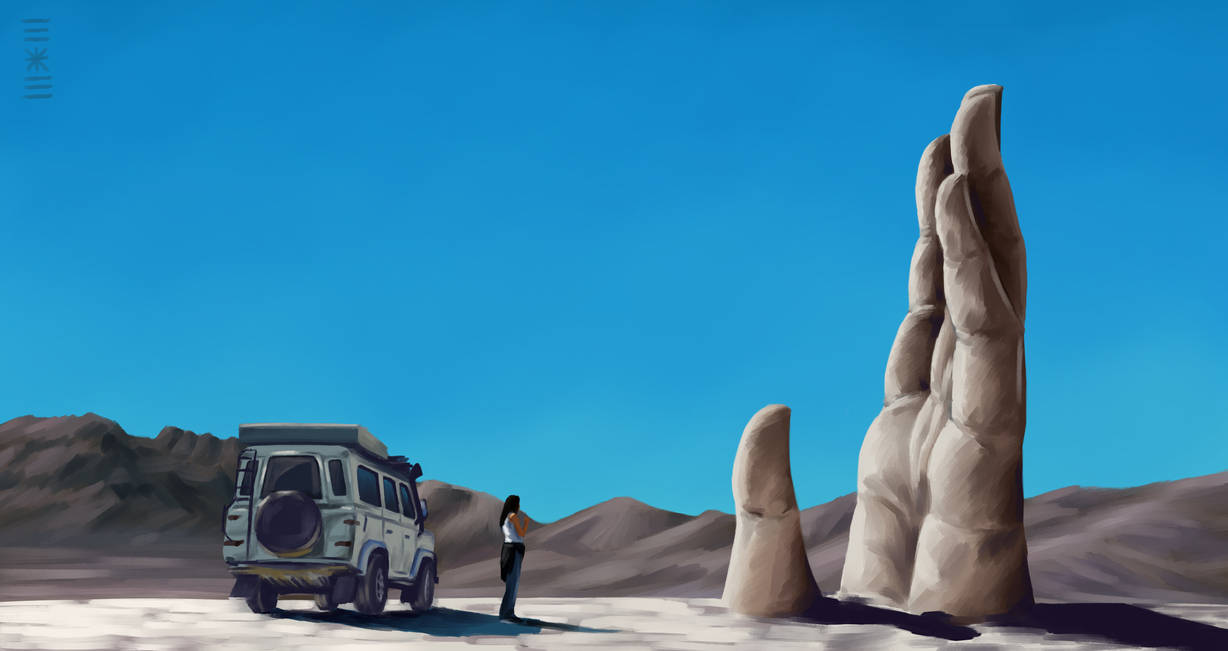
In the stark, otherworldly landscape of Chile’s Atacama Desert, one of the driest places on Earth, an immense and enigmatic sculpture rises from the sand. Known as the Mano del Desierto (Hand of the Desert), this towering concrete hand has captivated travelers and art enthusiasts since its inauguration, serving as both a striking landmark and a profound symbol of the human condition. Far more than just a roadside attraction, this monumental artwork embodies themes of vulnerability, resilience, and the relentless march of time against the vastness of nature.
The Visionary Artist: Mario Irarrázabal
The creative force behind the Hand of the Desert is Chilean sculptor Mario Irarrázabal, born in Santiago in 1940. Irarrázabal is renowned for his powerful and expressive human figures, often delving into complex themes such as loneliness, injustice, suffering, and the existential meaning of life and death. His artistic journey led him to study philosophy and art at the prestigious University of Notre Dame in the United States, followed by sculpture training under the esteemed German sculptor Otto Waldemar in West Berlin. This diverse intellectual and artistic background profoundly shaped his unique approach to art, particularly his fascination with the human hand as a recurring motif.
For Irarrázabal, sculpture is not merely about aesthetics; it’s about creating a tangible, “primitive, magical force” that can “touch people’s hearts.” He aims to construct metaphors that surprise and provoke thought, speaking to the universal experiences of humanity. The exaggerated scale of his hand sculptures, including the Mano del Desierto, is intentionally designed to emphasize both human insignificance and incredible strength when confronted with the overwhelming forces of nature or societal challenges.
Construction in the Arid Expanse
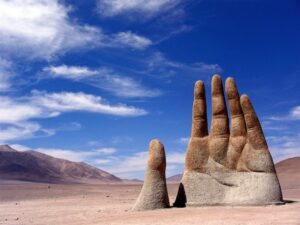
The creation of the Hand of the Desert was a feat of engineering and perseverance. Standing an impressive 11 meters (36 feet) tall, the sculpture was meticulously constructed on-site in 1992. The process involved erecting scaffolding and then carefully pouring concrete over a reinforced iron framework. This robust internal structure ensures the sculpture’s stability against the harsh desert winds and occasional tremors, a testament to its enduring nature. The construction phase itself took several weeks, transforming an empty stretch of desert into a canvas for a powerful artistic statement.
Interestingly, the initial concept for the sculpture originated with a local cement company. However, the project was temporarily shelved due to the company’s bankruptcy. Undeterred, Irarrázabal passionately pursued the idea, garnering support from engineer friends and crucially, securing funding from Corporación Pro Antofagasta. This local booster organization, dedicated to promoting the development and cultural initiatives of the Antofagasta region, recognized the potential of Irarrázabal’s vision to create a landmark that would break the monotonous flatness of the desert landscape.
A Symbolism Open to Interpretation
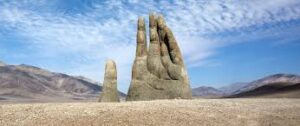
One of the most compelling aspects of the Mano del Desierto is its multifaceted symbolism, which Irarrázabal deliberately left open to individual interpretation. While the artist himself often speaks of the hand representing human helplessness, frailty, and vulnerability in the face of the vastness of the desert and existence, various other interpretations have emerged among visitors and art critics:
- Human Resilience: Paradoxically, for some, the hand rising defiantly from the ground symbolizes human resilience, perseverance, and determination to overcome adversity. It speaks to our enduring spirit, even in the most desolate circumstances.
- Loneliness and Pain: Given Irarrázabal’s thematic explorations, the hand can also be seen as an expression of profound loneliness or suffering, perhaps even a silent scream reaching out for connection or relief in an isolated world. Some interpretations link it to the pain and injustices experienced during Chile’s military dictatorship, serving as a silent memorial to victims of brutal torture, though this is a more specific and less universally accepted interpretation than the broader themes of human condition.
- Mother Nature’s Embrace: Another poetic interpretation, especially when considered alongside a similar sculpture by Irarrázabal in Uruguay, suggests the two hands collectively symbolize Mother Nature’s hands holding up the South American continent. The Chilean hand (a left hand) and the Uruguayan counterpart (a right hand) create a profound continental embrace.
- A “Drowning” Hand: Some see the hand as “not waving but drowning,” emphasizing a sense of being overwhelmed and submerged by the sand, struggling to escape.
Ultimately, the power of the Hand of the Desert lies in its ability to provoke personal reflection, inviting each observer to find their own meaning within its silent, outstretched gesture.
Location and Accessibility in the Atacama
The Mano del Desierto is strategically located approximately 75 kilometers (46 miles) south-east of Antofagasta, a major port city in northern Chile. It stands at an altitude of about 1,100 meters (3,608 feet) above sea level within the desolate beauty of the Atacama Desert. Its placement off Route 5 (part of the Pan-American Highway), between mile markers 1309 and 1310, makes it surprisingly accessible for travelers traversing this remote region.
Despite its remote setting, the sculpture is a popular tourist attraction. There are no fences, gates, or entrance fees, allowing visitors to drive their vehicles right up to the base of the monument. This open access encourages an intimate interaction with the artwork, inviting people to walk around it, touch its rough surface, and capture unique photographs against the backdrop of the vast desert sky. The best time to visit is typically during spring (September to November) or fall (March to May) when the weather is milder, though the desert can be extremely hot in summer and surprisingly cold in winter, especially at night. Visitors are advised to bring plenty of water and wear sunscreen due to the intense sun and arid conditions.
Global Gestures: Other Hands by Irarrázabal
While the Hand of the Desert is undoubtedly Mario Irarrázabal’s most celebrated work, it is not his only “hand” sculpture that emerges from the earth. His fascination with this motif has led to similar, equally evocative works installed across different continents:
- “La Mano” or “Monumento al Ahogado” (Monument to the Drowned) in Punta del Este, Uruguay (1982): This iconic sculpture, located on Brava Beach, features five fingers partially submerged in the sand. Often interpreted as a warning to swimmers about the strong currents, it also carries the deeper themes of human vulnerability that permeate Irarrázabal’s work.
- “Hand” in Juan Carlos I Park, Madrid, Spain (1987): Another hand sculpture, this one rising from the ground in a public park, offering a slightly different context but maintaining the artist’s signature style.
- “Hand” in Venice, Italy (1995): Though less prominent, a similar work by Irarrázabal can also be found in the historic city of Venice, further extending his global artistic footprint.
These international “hands” create a fascinating dialogue, connecting different landscapes and cultures through a shared artistic vision and common human themes.
Maintenance and Enduring Appeal
Given its remote location and public accessibility, the Hand of the Desert has unfortunately been a frequent target of graffiti and vandalism. Visitors are strongly encouraged to be respectful of this unique piece of public art and refrain from defacing it. Fortunately, Corporación Pro Antofagasta, the organization that helped fund its creation, continues to act as its caretaker, organizing bi-annual cleaning efforts (dubbed “hand washing”) to remove unwanted additions and preserve the sculpture’s integrity.
Despite these challenges, the Mano del Desierto remains a powerful and enduring landmark. It serves as a stark reminder of humanity’s fleeting presence against geological time, yet simultaneously celebrates our innate drive to create, to express, and to leave a lasting mark, even in the most desolate of places. It invites contemplation on our relationship with nature, our shared human experiences of struggle and hope, and the profound impact that art can have when placed in an unexpected and awe-inspiring setting.