
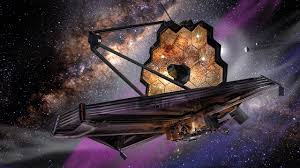
The James Webb Space Telescope (JWST) stands as humanity’s most ambitious and powerful astronomical observatory, a technological marvel orbiting millions of miles from Earth. Far more than just Hubble’s successor, Webb is a revolutionary instrument designed to peer into the universe’s most ancient and enigmatic corners, offering an unprecedented glimpse into cosmic history. Its journey, from a concept on paper to a fully operational sentinel in space, represents decades of relentless innovation, international collaboration, and overcoming immense engineering challenges.
A Visionary Project: From Concept to Reality
The origins of the JWST trace back to 1996 when it was conceived as the “Next Generation Space Telescope.” Renamed in 2002 to honor James E. Webb, NASA’s second administrator who famously championed scientific research alongside human spaceflight during the Mercury, Gemini, and Apollo programs, the telescope embodies a commitment to pushing the boundaries of knowledge. Its development was a monumental undertaking, spanning 26 years from its initial proposal to its launch on December 25, 2021. This extended timeline was a testament to the sheer complexity of the project, encountering numerous technical hurdles and spiraling costs. Despite these challenges, the unwavering dedication of thousands of scientists, engineers, and technicians across three continents ultimately brought this audacious vision to fruition.
Designed for the Invisible: The Power of Infrared Astronomy
Unlike its predecessor, the Hubble Space Telescope, which primarily observes in visible and ultraviolet light, Webb is meticulously engineered to capture infrared light. This critical distinction is what allows Webb to achieve its profound scientific objectives. As the universe expands, light from the earliest stars and galaxies is stretched, or “redshifted,” into the infrared spectrum, making it invisible to optical telescopes. By focusing on infrared, Webb can effectively “see back in time,” observing the very first stars and galaxies that formed over 13.5 billion years ago, merely hundreds of millions of years after the Big Bang.
Furthermore, infrared light has a unique ability to penetrate thick clouds of cosmic dust that obscure visible light. This capability allows Webb to peer into stellar nurseries, where stars and planetary systems are being born, providing clearer views of these vital processes than ever before. This deep insight into obscured regions unlocks new understanding of galaxy evolution, star formation, and the birth of planets.
The Eye of Webb: A Suite of Advanced Instruments
Webb is equipped with four highly sensitive scientific instruments, each playing a crucial role in its exploratory mission:
- Near-Infrared Camera (NIRCam): This is Webb’s primary imager, capable of capturing exquisite, high-resolution images in two different infrared ranges. NIRCam is instrumental in detecting light from the earliest stars and galaxies, and it also features coronagraphic capabilities for observing exoplanets by blocking out the glare of their host stars. It also plays a critical role in aligning the telescope’s mirror segments.
- Near-Infrared Spectrograph (NIRSpec): Designed for large spectroscopic surveys, NIRSpec can analyze the light from up to 100 objects simultaneously. By spreading light into a spectrum, it allows scientists to determine the chemical composition, temperature, and motion of distant galaxies, quasars, and stars. It’s particularly useful for studying the atmospheres of exoplanets using transit spectroscopy.
- Mid-Infrared Instrument (MIRI): MIRI is the only instrument capable of operating at mid-infrared wavelengths, requiring an additional cryogenic cooler to bring its temperature down to an astonishing -266 degrees Celsius (over 30 degrees colder than the other instruments). Its versatility allows for imaging, coronagraphy, and various forms of spectroscopy, supporting everything from observations within our own Solar System to studies of the very early universe. MIRI’s ability to see through dense dust is unparalleled.
- Fine Guidance Sensor/Near InfraRed Imager and Slitless Spectrograph (FGS/NIRISS): The FGS part is crucial for keeping the telescope precisely pointed, ensuring stable and high-resolution imaging. NIRISS provides unique spectroscopic capabilities for characterizing exoplanet atmospheres and detecting the earliest, most distant galaxies.
A Cold, Stable Home: Orbiting at L2
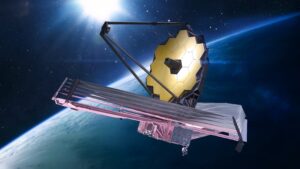
Unlike the Hubble Space Telescope, which orbits Earth at an altitude of approximately 540 kilometers (335 miles), Webb resides far more remotely, orbiting the Sun at the second Sun-Earth Lagrange Point (L2), roughly 1.5 million kilometers (1 million miles) from Earth. This unique location offers several critical advantages:
- Thermal Stability: At L2, Webb can always keep the Sun, Earth, and Moon on one side, allowing its massive sunshield to continuously protect the telescope and instruments from their heat and light. This enables the extreme cryogenic temperatures required for infrared observation.
- Uninterrupted Views: Being outside Earth’s shadow provides Webb with an uninterrupted view of the cosmos, allowing for 24/7 science operations without periodic eclipses that affect telescopes in low Earth orbit.
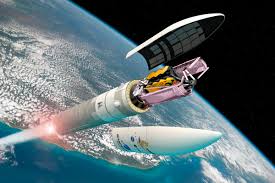
- Fuel Efficiency: The gravitational forces at L2 allow Webb to maintain its orbit with minimal fuel expenditure, primarily for station-keeping maneuvers. The precise launch by the Ariane 5 rocket further conserved fuel, significantly extending Webb’s anticipated mission life from an initial 5-10 years to potentially over 20 years.
An Engineering Marvel: Mirrors, Sunshield, and Deployment
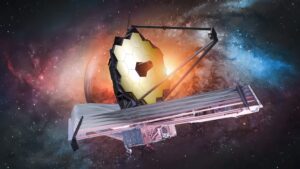
Webb’s design is a triumph of modern engineering. Its iconic primary mirror measures 6.5 meters (21 feet) in diameter, significantly larger than Hubble’s 2.4-meter mirror. This colossal mirror is not a single piece but comprises 18 hexagonal segments made of lightweight beryllium, each coated with a microscopically thin layer of gold to optimize infrared light reflection. Because the mirror was too large to fit into any existing rocket, it was designed to fold like origami for launch.
Equally impressive is Webb’s five-layer sunshield, roughly the size of a tennis court (21.197m x 14.162m, or 69.5 ft x 46.5 ft). Each layer, thinner than a human hair, is made of Kapton, a tough plastic coated with reflective metal. The five layers work together to reduce the temperature difference between the sun-facing side (up to 85°C or 185°F) and the telescope side (down to -233°C or -388°F) by approximately 300°C (570°F). This innovative shield is vital for keeping the instruments cold enough to detect faint infrared signals without being overwhelmed by their own heat.
The deployment process in space was perhaps the most nail-biting phase of the mission. Over a painstaking two-week period post-launch, Webb underwent a highly choreographed transformation. This involved more than 50 major deployment steps and the flawless operation of 178 release mechanisms. From the unfurling of the solar array and high-gain antenna, to the unfolding of the massive sunshield pallets and individual layers, and finally the precise unfolding of the secondary mirror and primary mirror wings, every step was critical and ground-controlled, monitored with bated breath by engineers. The successful completion of this complex ballet was a testament to meticulous planning and rigorous testing, especially given that the full deployment could not be tested in Earth’s gravity.
Early Discoveries and Future Impact
Since its commissioning, the James Webb Space Telescope has rapidly delivered groundbreaking science and breathtaking images that have captivated both the scientific community and the public. Its very first full-color images, released in July 2022, included the stunning “Cosmic Cliffs” of the Carina Nebula, the ghostly glow of the Southern Ring Nebula, and the deepest infrared view of the universe ever taken: SMACS 0723, a galaxy cluster acting as a gravitational lens, revealing thousands of previously unseen galaxies.
Webb has since provided unprecedented details on exoplanet atmospheres, such as that of WASP-96 b, revealing the presence of water vapor. It has imaged distant galaxies with astonishing clarity, observed the rings of Uranus in new detail, and peered into regions of active star formation, refining our understanding of how stars and planets are born.
The James Webb Space Telescope is more than just a powerful research tool; it is a global endeavor that promises to redefine our understanding of the universe. Its ability to look further back in time and penetrate cosmic veils is unlocking secrets about the very first moments after the Big Bang, the conditions for life beyond Earth, and the intricate dance of galaxy and star formation. With an extended mission life, Webb is poised to continue revolutionizing astronomy for decades to come, inspiring new generations of scientists and bringing humanity closer to answering some of the most fundamental questions about our cosmic origins