
The Invisible Snowfall Beneath the Waves: Exploring Marine Snow and Its Vital Role in Earth’s Oceans
When we think of snow, our minds often conjure images of delicate white flakes drifting down through cold winter skies. Yet, beneath the ocean’s surface, a much different kind of snow falls incessantly, invisible to most, but absolutely vital for life in the depths. This phenomenon, known as marine snow, is a continuous rain of organic and inorganic particles that drifts slowly downward through the water column, connecting the ocean’s sunlit surface with its darkest, most mysterious depths.
What is Marine Snow?
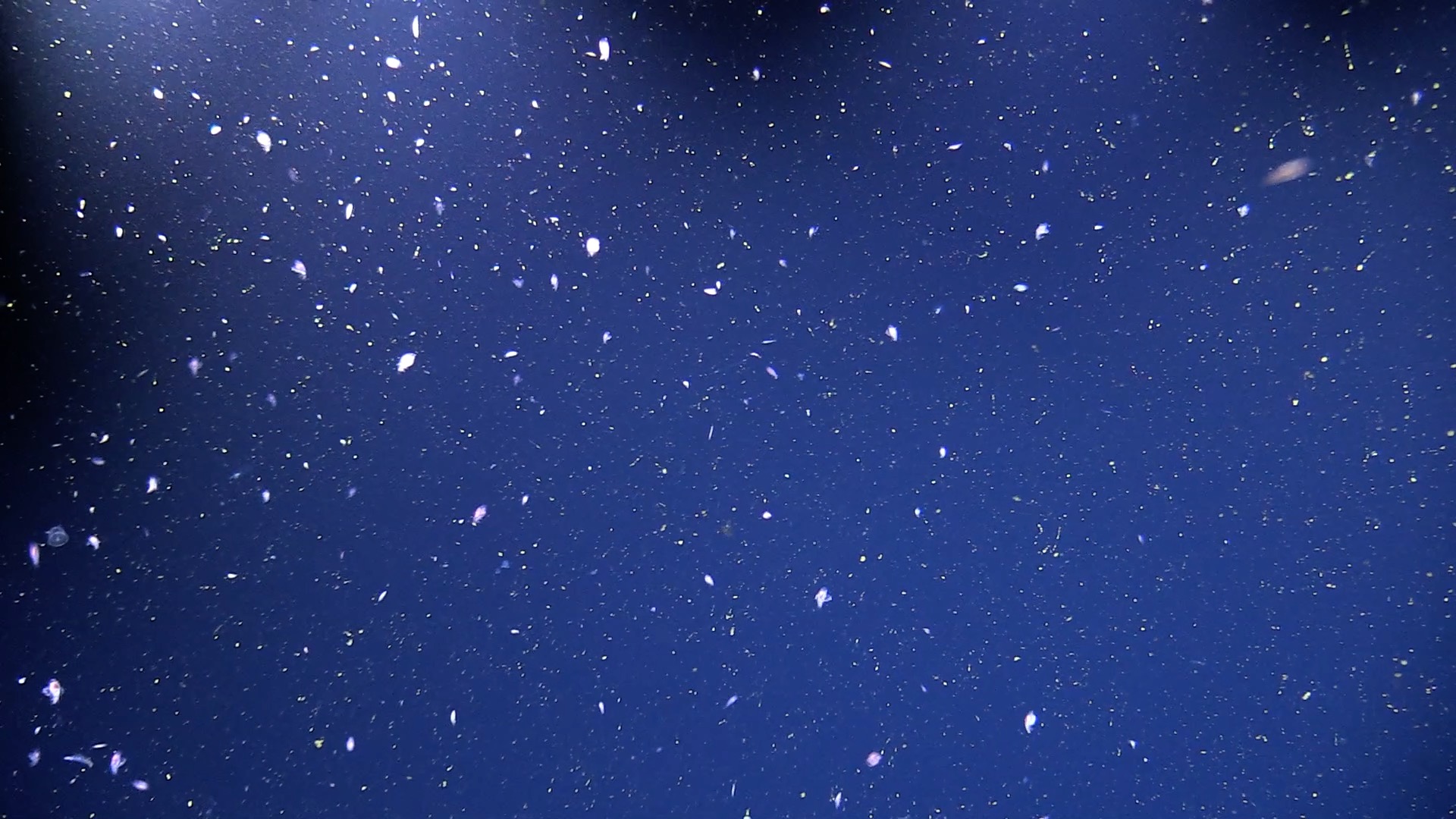
Marine snow is a complex mixture of dead and decaying organic matter, mineral particles, and microorganisms, loosely bound together into aggregates that resemble fluffy snowflakes under a microscope. It includes the remains of phytoplankton (microscopic algae that photosynthesize near the ocean surface), fecal pellets excreted by zooplankton and small animals, fragments of dead animals and plants, mucus secreted by marine organisms, bacteria, and tiny bits of dust and sediment washed into the ocean from rivers and the atmosphere.
Despite being mostly microscopic, these aggregates can vary in size—from less than a millimeter to several centimeters wide—forming fragile, snow-like flakes that slowly drift downward at rates ranging from a few meters per day up to several hundred meters per day depending on their composition, density, and shape.
Formation and Composition
The formation of marine snow begins at the ocean’s surface, where phytoplankton flourish by converting sunlight and carbon dioxide into organic matter. These microscopic plants form the base of the oceanic food web, nourishing tiny animals like zooplankton, which in turn feed larger fish and marine mammals. When phytoplankton die or are consumed, their remains, combined with the waste products of zooplankton and other animals, start to aggregate into larger particles.
Sticky substances, such as transparent exopolymer particles (TEPs) produced by phytoplankton and bacteria, act like glue, binding together disparate components into larger clumps. These glutinous aggregates capture even more particles, including inorganic dust and minerals suspended in the water, creating the fluffy, porous flakes that make up marine snow.
Microbes—bacteria and archaea—also colonize these particles, decomposing organic material as the aggregates sink. This microbial activity not only recycles nutrients but also transforms the chemical composition of marine snow, influencing its density and sinking speed.
The Journey Through the Water Column

Once formed, marine snow begins its descent through the ocean layers, traveling hundreds to thousands of meters to reach the seafloor. This vertical journey is not a simple free fall; it is a dynamic process influenced by water currents, particle size, shape, and density, as well as biological interactions.
Some aggregates are rapidly consumed or fragmented by filter-feeding animals and microorganisms on the way down, reducing the amount of organic material that actually reaches the ocean floor. Others may clump together further or incorporate mineral ballast such as calcium carbonate or silica, which increase their sinking velocity.
The time marine snow takes to reach the bottom varies greatly: in shallow coastal waters, it might take a few days, whereas in the deep ocean, sinking can take weeks. During this voyage, marine snow sustains a diverse community of microorganisms and small animals, essentially forming a mobile habitat and feeding ground in the otherwise nutrient-poor open ocean.
Ecological Importance
Marine snow is fundamental to ocean ecology, especially in the aphotic zone—the region beyond sunlight penetration where photosynthesis is impossible. In these deep, dark waters, food is scarce. The continuous fall of marine snow delivers essential nutrients and energy to a myriad of deep-sea organisms, from tiny bacteria and archaea to large benthic animals such as sea cucumbers, brittle stars, deep-sea corals, and even enigmatic species like the vampire squid.
Without marine snow, life in these abyssal environments would be impossible, as there is no other significant energy source. It forms the base of deep-sea food webs, linking surface productivity with deep-ocean ecosystems.
Role in the Global Carbon Cycle
Beyond supporting marine life, marine snow plays a crucial role in Earth’s biological carbon pump, a process by which carbon fixed by photosynthetic organisms at the ocean’s surface is transported to the deep ocean and seafloor. Phytoplankton absorb carbon dioxide from the atmosphere during photosynthesis, and when they die or are consumed, their organic matter becomes incorporated into marine snow.
As marine snow sinks, it effectively removes carbon from the atmosphere-ocean interface, sequestering it in deep waters and sediments for centuries to millennia. This sequestration helps regulate global climate by controlling atmospheric CO₂ concentrations. The ocean’s ability to capture and store carbon in this way is a vital counterbalance to human-induced greenhouse gas emissions.
Physical and Biological Factors Affecting Marine Snow

Recent research has revealed that the physical properties of marine snow aggregates, such as their size, porosity, and shape, dramatically influence their sinking rates. Surprisingly, smaller or more elongated particles may sink faster than large, dense, or spherical ones. Salt absorption and water viscosity also play roles in determining descent speed.
Biologically, zooplankton and microbial communities are constantly reshaping marine snow. Some animals fragment aggregates into smaller pieces, slowing sinking, while others package organic matter into dense fecal pellets that sink rapidly. Microbial degradation can both reduce the organic carbon available for sequestration and change aggregate density.
These processes are complex and still under active investigation, as understanding them is critical for predicting how oceanic carbon cycling might respond to environmental changes such as warming, acidification, and pollution.
Global and Extraterrestrial Occurrence
Marine snow is not confined to any single ocean or depth. It occurs globally, from tropical seas to polar oceans, and at all depths where water exists. Recent studies even suggest that similar processes might occur in extraterrestrial aquatic environments, such as the subsurface oceans of icy moons like Europa or Enceladus, where organic particles could settle through their alien seas.
Conclusion
The quiet, continual fall of marine snow is one of the ocean’s most important yet overlooked phenomena. It sustains life in the dark, oxygen-poor depths of the sea and plays a pivotal role in Earth’s carbon cycle and climate regulation. From microscopic globs of organic material to centimeter-scale flakes, marine snow forms an invisible conveyor belt linking surface productivity to deep ocean ecosystems.
Understanding marine snow enhances our appreciation of the ocean’s complexity and highlights the interconnectedness of life on Earth—from sunlit phytoplankton at the surface to mysterious creatures dwelling in the abyss. As science advances, this underwater snowfall continues to reveal secrets about how our planet functions and how fragile yet resilient its systems truly are.