
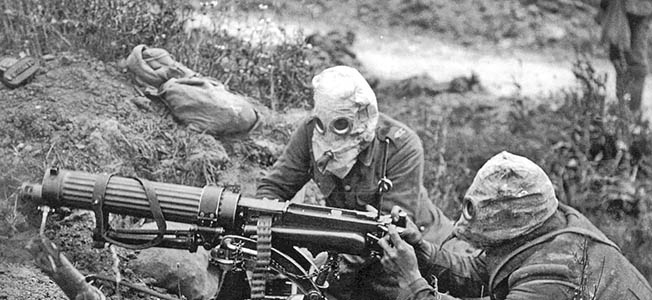
The invention of the machine gun marked a pivotal turning point in the history of warfare and weaponry, revolutionizing combat by enabling rapid, sustained fire that could dominate battlefields. However, determining who truly invented the first machine gun requires an understanding of evolving firearm technology, varying definitions of automatic fire, and incremental innovations by multiple inventors over decades.
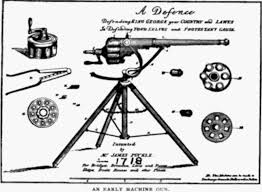
Historically, early attempts to create rapid-fire weapons date back centuries, but these devices were far from what we now consider a machine gun. Early volley guns, which could fire multiple barrels simultaneously or in rapid succession, were cumbersome and required manual reloading. One notable example is the Puckle gun from the early 18th century, which featured a revolving cylinder enabling repeated shots but lacked full automatic firing capability.
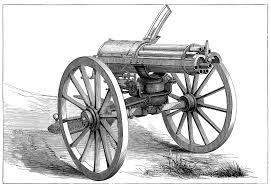
The breakthrough toward a true machine gun came in the 19th century. In 1862, American inventor Richard Jordan Gatling patented the Gatling gun, a multi-barreled weapon operated by a hand crank. This design rotated multiple barrels, each firing in sequence as the crank turned, allowing a rate of fire much faster than conventional single-shot firearms. While the Gatling gun represented a significant advancement in rapid-fire technology and saw use in conflicts such as the American Civil War, it still required manual operation for each shot and was not self-powered.
Meanwhile, various volley guns developed in Europe employed multiple barrels to unleash bursts of fire, but none achieved fully automatic cycling or reloading. Their operation depended heavily on manual input, and their effectiveness was limited compared to later designs.
The true revolution arrived in 1884 with Sir Hiram Stevens Maxim, who invented the first fully automatic machine gun powered by recoil energy. The Maxim gun ingeniously harnessed the recoil produced by firing each round to cycle the weapon’s action automatically—extracting the spent cartridge, chambering a new round, and firing again without manual intervention. This eliminated the need for external mechanical input, such as a hand crank, fundamentally changing how firearms could operate.
The Maxim gun incorporated a water-cooling jacket around the barrel, which enabled it to sustain prolonged firing without overheating—a significant problem with earlier rapid-fire weapons. Its belt-fed ammunition system allowed continuous feeding of cartridges, vastly improving the weapon’s operational efficiency. Capable of firing up to 600 rounds per minute, the Maxim gun became the first practical, fully automatic machine gun and was quickly adopted by militaries worldwide.
The impact of the Maxim gun on warfare was profound. It redefined infantry tactics and introduced unprecedented firepower, contributing to the deadly stalemates of trench warfare in World War I. Its design also served as the foundation for many later machine guns, such as the British Vickers gun and the German MG 08, which refined and adapted Maxim’s principles.
Between Gatling and Maxim, several other designs emerged attempting to bridge manual and automatic operation. Weapons such as the Gardner gun and the Nordenfelt gun sought to increase rates of fire but lacked the fully automatic self-cycling mechanism that Maxim pioneered.
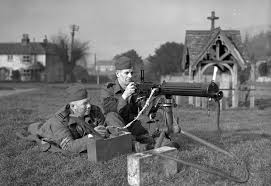
In the early 20th century, advances continued with lighter, more portable automatic weapons. John Browning’s designs introduced gas-operated mechanisms and air-cooled barrels, reducing weight and improving mobility on the battlefield. These developments laid the groundwork for the modern general-purpose machine gun, epitomized by models like the German MG 34 in the 1930s, which could serve multiple roles with reliability and versatility.
In summary, the designation of “first machine gun” depends on the criteria applied. If manual rapid-fire capability defines the term, the Gatling gun is a landmark invention. However, for the first truly self-powered automatic weapon capable of sustained fire without manual cycling, the Maxim gun stands as the definitive breakthrough. Its innovative recoil-operated mechanism transformed firearms technology and reshaped military combat forever.