
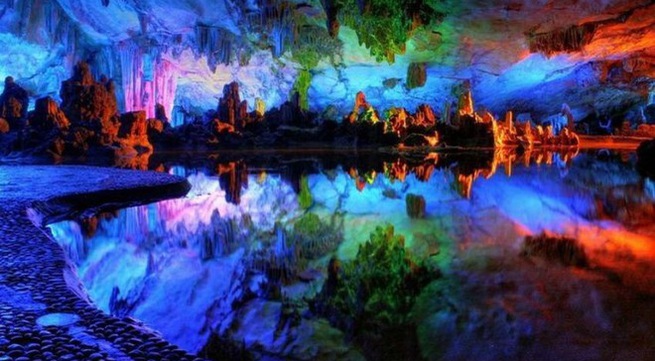
Hidden beneath the rugged limestone mountains of Phong Nha-Kẻ Bàng National Park in Quảng Bình Province, central Vietnam, lies a realm so colossal and alien that it defies belief — Sơn Đoòng Cave. More than just the world’s largest cave, Sơn Đoòng is a lost world, complete with its own jungle, weather system, and ecosystem, untouched for millions of years.
Discovered only in the 21st century, Sơn Đoòng has quickly become one of the planet’s most coveted exploration destinations, drawing scientists, adventurers, and environmentalists alike. What lies inside is nothing short of extraordinary.
Where is Sơn Đoòng Cave?
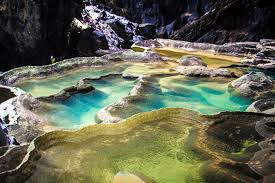
Sơn Đoòng is located near the Laos-Vietnam border within the Phong Nha-Kẻ Bàng National Park, a UNESCO World Heritage Site renowned for its ancient karst landscapes and vast cave networks.
The cave sits beneath a dense jungle canopy and can only be accessed by trekking through remote, rugged terrain. It takes 2 full days of jungle trekking and river crossings just to reach the cave entrance, which is hidden beneath a cliffside in the forest.
History of Discovery
Although local people were aware of the cave for decades, it wasn’t until 1991 that Hồ Khanh, a local farmer and logger, accidentally stumbled upon it while seeking shelter during a storm. But the cave remained unexplored and forgotten until 2009, when Hồ Khanh helped a team of British speleologists from the British Cave Research Association (BCRA) rediscover it.
Upon entering, the team was stunned: a cavern so vast, it could fit a Boeing 747 or even the entire Washington Monument. It wasn’t just the largest cave by volume, it was an underground world unlike anything ever seen.
Geological and Natural Features
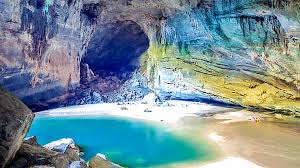
Sơn Đoòng was formed 2–5 million years ago by the action of water eroding away limestone along a fault line. What makes it unique is not just its size, but the spectacular natural features found inside.
Cave Dimensions
-
Main passage: over 5 km long
-
Height: up to 200 meters (660 ft)
-
Width: up to 150 meters (490 ft)
-
Volume: estimated at 38.5 million cubic meters
-
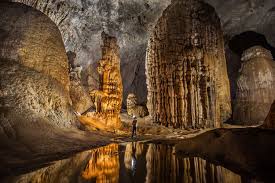
Stalagmites: up to 70 meters tall
To put it in perspective: an entire city block of Manhattan, complete with 40-story buildings, could comfortably fit inside.
The Inner Ecosystem: A Living Cave
Perhaps the most remarkable feature of Sơn Đoòng is not its size — but its living, breathing ecosystem.
Rainforest Inside a Cave
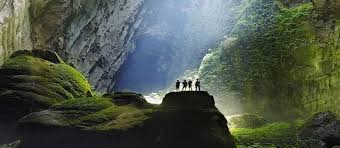
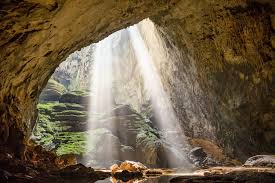
Two enormous dolines (sinkholes) in the cave ceiling allow sunlight to penetrate deep inside, supporting a miniature jungle of its own. This forest, known as “The Garden of Edam,” is home to towering trees, thick vegetation, vines, and even wildlife.
Fauna and Flora
-
Monkeys, birds, snakes, and bats have been spotted within or near the dolines.
-
Insects, including rare woodlice and millipedes, have adapted to the cave’s humidity and darkness.
-
Mosses and ferns grow in the areas with sunlight.
-
Microbial life thrives in the river and mineral-rich walls, providing opportunities for scientific research into extremophiles
A Cave with Its Own Weather
Due to its size and airflow, Sơn Đoòng has a localized climate system. Clouds and fog form inside the cave, creating misty, surreal landscapes where the temperature and humidity can change dramatically over just a few meters.
Underground River
A subterranean river still flows through parts of Sơn Đoòng. Visitors must cross underground streams and pools, and the sound of rushing water is a constant reminder of the forces that shaped this environment.
Adventure Tourism: Exploring Sơn Đoòng
Tourism in Sơn Đoòng is carefully regulated to protect its fragile environment. Only a few hundred visitors are allowed per year, and only through Oxalis Adventure, the exclusive licensed tour operator approved by the Vietnamese government.
The Sơn Đoòng Expedition (4D3N or 6D5N)
Here’s what the typical journey includes:
-
Day 1: Jungle trek through Phong Nha-Kẻ Bàng National Park, cross rivers, and camp near Hang Én, the third-largest cave in the world.
-
Day 2: Reach the entrance to Sơn Đoòng via steep jungle descent and rope climbing.
-
Day 3–4: Traverse through the cave’s massive chambers, cross underground rivers, and camp inside the cave.
-
Highlights include:
-
“Watch Out for Dinosaurs”: an iconic viewpoint with prehistoric vibes.
-
Great Wall of Vietnam: a 90-meter-high calcite wall near the end of the cave, which requires ropes and ladders to climb.
-
Alien rock formations, unique skylights, and photographic marvels.
-
Note: Tours are physically demanding. Participants must pass fitness screening and have trekking experience.
Conservation and Sustainability
Sơn Đoòng’s ecosystem is extremely sensitive. To minimize human impact:
-
No construction or permanent infrastructure exists inside.
-
All waste is carried out.
-
Visitor numbers are capped.
-
Local porters and guides are employed to benefit nearby communities.
Scientists are also working to map the remaining unexplored sections. It’s believed that Sơn Đoòng may connect to other massive cave systems, potentially making it even larger than current estimates.
Unforgettable Visual Wonders
Visitors often describe Sơn Đoòng as:
-
“Stepping into another planet”
-
“A cathedral of nature”
-
“The only place where you can see clouds, rivers, and jungles all inside a cave”
From the sunbeams slicing through the ceiling to underground forests and mist-shrouded passageways, the cave offers scenes straight out of science fiction or fantasy.
Why Sơn Đoòng Is Truly One of a Kind
-
Largest cave on Earth by volume
-
Only cave with a thriving jungle and weather system
-
Unique biodiversity and untouched ecosystem
-
World-class adventure trekking destination
-
Strictly protected, limited access, and ecotourism focused
How to Visit
-
Operator: Oxalis Adventure (only licensed company)
-
Tour duration: 4–6 days
-
Price: ~$3,000–$4,000 USD (includes permits, food, gear, guides, porters)
-
Best time to visit: January to August (dry season). Tours are suspended during the rainy season due to river flooding.
Conclusion: Earth’s Final Frontier
Sơn Đoòng cave is not just a cave — it is a lost world, a living system, a humbling reminder of Earth’s raw and ancient power. Its untouched beauty is not just something to witness but to protect, as one of the last frontiers of our natural world.
For those lucky enough to enter its depths, the journey is not merely physical — it’s a spiritual and emotional voyage into nature’s most surreal masterpiece.