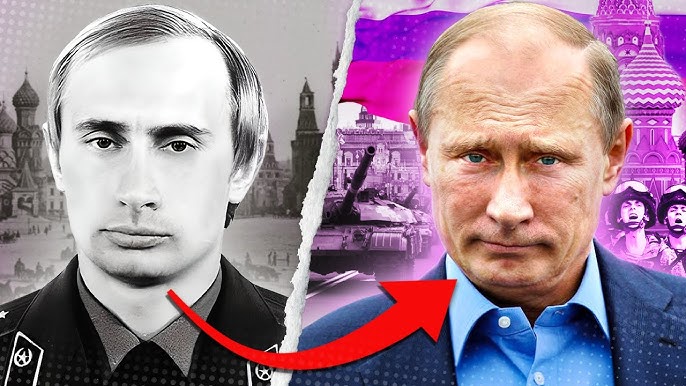
Vladimir Vladimirovich Putin has dominated Russian politics for over two decades, shaping the nation’s trajectory and its place on the global stage. Serving first as acting President in 1999, then as President from 2000 to 2008, Prime Minister from 2008 to 2012, and again as President since 2012, Putin’s leadership has been characterized by the centralization of power, an assertive foreign policy, and significant shifts in Russia’s economic and social landscape. His tenure has seen both periods of economic stability and growth, and increasing international tension.
Early Life and KGB Career
Vladimir Putin was born on October 7, 1952, in Leningrad (now St. Petersburg), Soviet Union. His parents, Vladimir Spiridonovich Putin and Maria Ivanovna Putina, were factory workers. Putin described his childhood as modest, growing up in a communal apartment. He displayed an early interest in sports, particularly sambo and judo, which instilled discipline and a strategic mindset that would later become evident in his political career.
In 1975, Putin graduated from Leningrad State University with a degree in law. Immediately after, he joined the KGB, the Soviet Union’s main security agency. His career in the KGB spanned 16 years, during which he reportedly worked in counter-intelligence. From 1985 to 1990, he was stationed in Dresden, East Germany, where he served as a relatively low-ranking officer, handling intelligence gathering and recruitment. The fall of the Berlin Wall in 1989 and the subsequent collapse of the Soviet Union deeply impacted him, reportedly reinforcing his belief in the necessity of a strong state. He returned to Leningrad in 1990 as the Soviet Union unraveled, a period of immense upheaval and uncertainty for Russia.
Rise to Power in Post-Soviet Russia
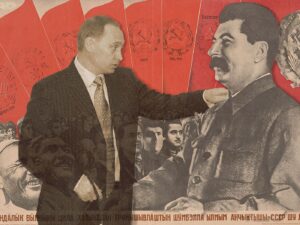
After leaving the KGB, Putin began his political career in the democratic but chaotic landscape of post-Soviet Russia. In 1990, he became an advisor to Anatoly Sobchak, a liberal politician and the mayor of St. Petersburg. Putin quickly rose through the city administration, holding various positions, including head of the Committee for External Relations, where he was responsible for international relations and foreign investments.
His reputation as an efficient and loyal administrator caught the attention of the Kremlin. In 1996, he moved to Moscow, joining President Boris Yeltsin’s administration. He held several key positions, including Deputy Chief of Presidential Property Management Department, head of the Federal Security Service (FSB, the successor to the KGB), and Secretary of the Security Council. His steady ascent culminated in his appointment as Prime Minister of Russia in August 1999.
At the time, Russia was grappling with a severe economic crisis and the ongoing Second Chechen War. Putin quickly gained public approval for his decisive, if often brutal, handling of the Chechen conflict. On December 31, 1999, Yeltsin unexpectedly resigned, naming Vladimir Putin as acting President. This sudden transition thrust Putin into the national spotlight, and he won the presidential election in March 2000, beginning his first full term.
First Presidential Terms (2000-2008): Centralization and Economic Recovery
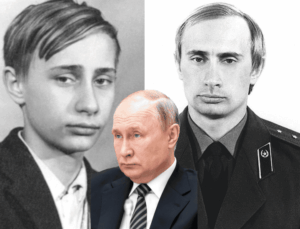
Putin’s initial presidency focused on consolidating power and stabilizing the country after a decade of post-Soviet turbulence. His early actions aimed at restoring the authority of the state and curbing the influence of powerful regional governors and oligarchs who had amassed vast wealth and political sway during the 1990s. He initiated reforms to strengthen the “vertical of power,” increasing federal control over regional governments. Several prominent oligarchs were either exiled, imprisoned, or had their assets nationalized if they challenged the Kremlin’s authority.
Economically, Russia experienced a period of significant growth, largely fueled by rising oil and gas prices. This allowed Putin’s government to repay much of Russia’s foreign debt, stabilize the national currency, and increase living standards for many Russians. He oversaw reforms in the tax system, judiciary, and pension system. However, critics argued that this economic success came at the cost of democratic freedoms, with increasing state control over media outlets and the marginalization of political opposition. Human rights organizations raised concerns about the conduct of the Chechen Wars and the crackdown on dissent.
In foreign policy, Putin initially sought cooperation with the West, especially in counter-terrorism efforts following the 9/11 attacks. However, as the 2000s progressed, his stance became increasingly assertive, challenging what he viewed as U.S. and NATO encroachment on Russia’s traditional sphere of influence.
Prime Minister (2008-2012): Maintaining Influence
Due to constitutional term limits, Putin was unable to seek a third consecutive presidential term in 2008. Instead, he endorsed his protégé, Dmitry Medvedev, who won the presidency. Putin then assumed the role of Prime Minister, a position he held for four years. While Medvedev was officially President, many observers believed that Putin retained significant power and influence behind the scenes, effectively pulling the strings. This period was often referred to as “tandemocracy.” During this time, Russia faced the global financial crisis of 2008, and the government implemented measures to mitigate its impact.
Return to Presidency (2012-Present): Assertiveness and Authoritarianism
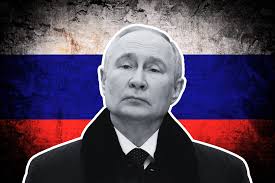
In 2012, Vladimir Putin ran for and won his third presidential term, following a constitutional amendment that extended presidential terms from four to six years. This return to the presidency was met with significant protests in Russia, highlighting growing internal discontent with his prolonged rule. His subsequent terms have seen a further tightening of control over the political system and civil society. Laws restricting public assembly, freedom of speech, and the activities of non-governmental organizations were enacted.
Internationally, Putin’s foreign policy became markedly more assertive and confrontational. Key events include:
- Annexation of Crimea (2014): Following a pro-Russian uprising and a controversial referendum, Russia annexed the Ukrainian peninsula of Crimea, drawing widespread international condemnation and sanctions from Western nations.
- Intervention in Eastern Ukraine (2014-present): Russia supported separatists in eastern Ukraine, leading to a protracted conflict in the Donbas region.
- Military Intervention in Syria (2015): Russia launched a military campaign in Syria to support President Bashar al-Assad’s regime, significantly altering the dynamics of the Syrian civil war and expanding Russia’s influence in the Middle East.
- Alleged Interference in Western Elections: Western intelligence agencies accused Russia of interfering in the 2016 U.S. presidential election and other democratic processes, accusations Russia denies.
- Full-Scale Invasion of Ukraine (2022): In February 2022, Putin ordered a full-scale invasion of Ukraine, escalating the conflict dramatically. Citing security concerns, the expansion of NATO, and the need to “demilitarize” and “denazify” Ukraine, this move triggered widespread international condemnation, unprecedented sanctions, and a significant humanitarian crisis, fundamentally altering global geopolitical alignments.
Domestically, the Russian economy remains heavily reliant on oil and gas exports, making it vulnerable to fluctuations in global energy prices. Despite economic challenges, Putin’s approval ratings have often remained high within Russia, bolstered by state media control and a narrative of restoring Russia’s power and prestige after the perceived weakness of the 1990s. However, concerns about human rights, the suppression of political opposition (such as Alexei Navalny), and democratic backsliding have intensified from international observers.
Impact and Legacy
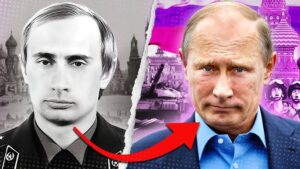
Vladimir Putin’s long tenure as the leader of Russia has undeniably left an indelible mark on the country and the world. He presided over a period of economic recovery and increased national pride following the turbulent post-Soviet era. However, his leadership has also been characterized by a significant erosion of democratic institutions, a crackdown on civil liberties, and an increasingly confrontational stance in international relations.
His most recent actions, particularly the full-scale invasion of Ukraine, have reshaped the global security landscape, solidified Western alliances against Russia, and led to a new era of geopolitical tension. The long-term consequences of his decisions on Russia’s economy, society, and its standing in the world will continue to unfold, making his leadership a critical subject of ongoing historical and political analysis.